Overview: Testimonies and observations from individuals in the public eye. Many identify social misjudgments because perceivers confuse individuals’ role-related or contextually constrained behaviors with their underlying characteristics.
__________________________________________________________________________
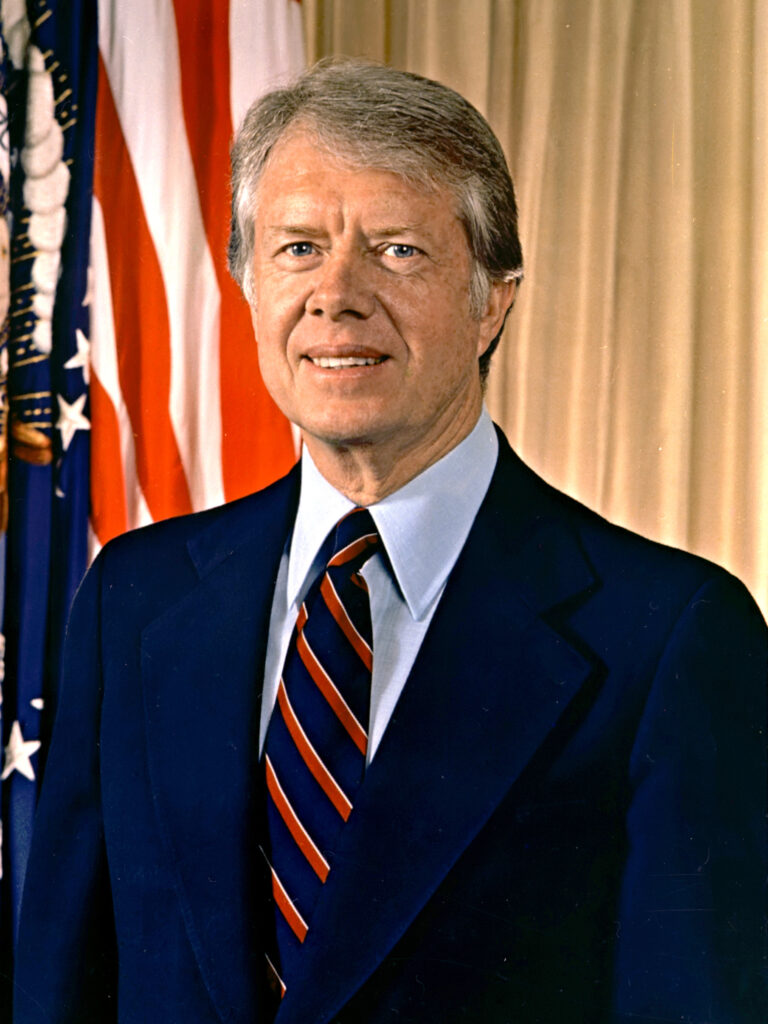
Jimmy Carter (former U.S. President) [speaking of people in impoverished countries he has met]: “We tend to underestimate folks who have an average income of only one or two dollars a day, who don’t have good educations or decent homes. We think they’re inferior to us in some way because they haven’t provided for their families as we have. When we deal with them on a personal basis, we soon learn that they’re just as good as we are, they’re just as intelligent, just as ambitious, just as hardworking. They’re family values are just as good as ours. We also learn that their perspective on life is different…often because of the circumstances in which they’ve been born and raised.”
__________________________________________________________________________
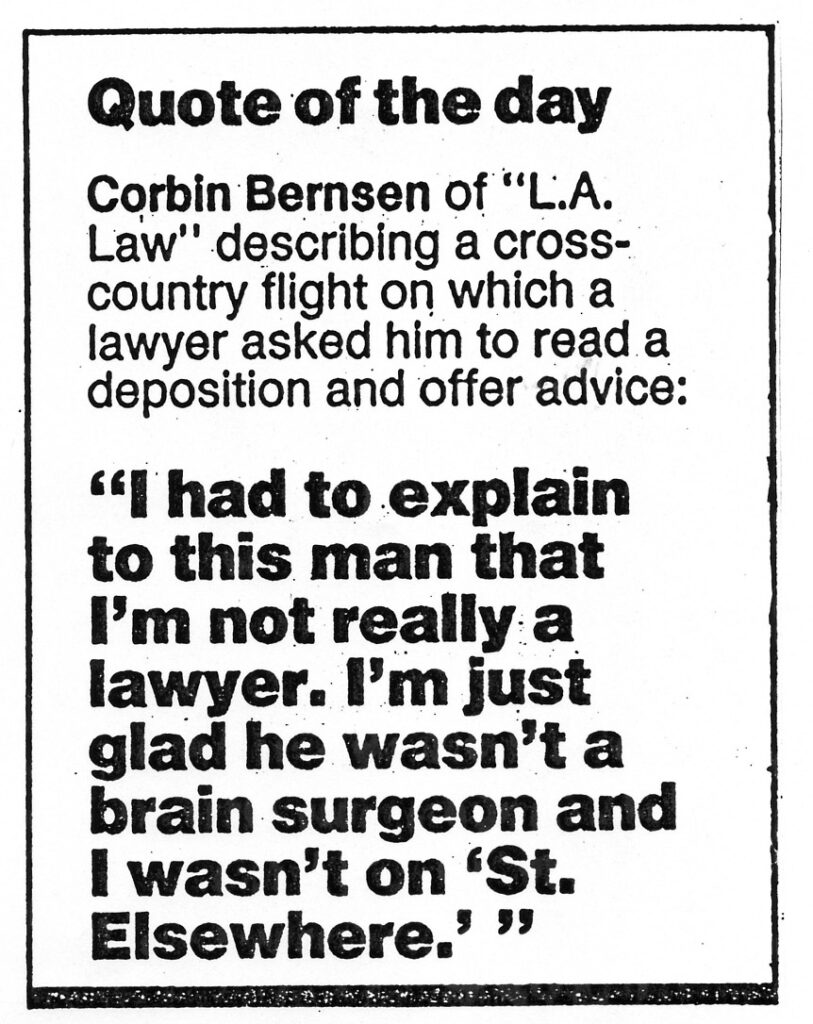
Corbin Bernsen (actor): Bernsen portrayed a lawyer on the television show L.A. Law many years ago; St. Elsewhere was popular at the same time as a TV medical drama about a hospital.
________________________________________________________________________________________________
Pool photo by Jessie Ward
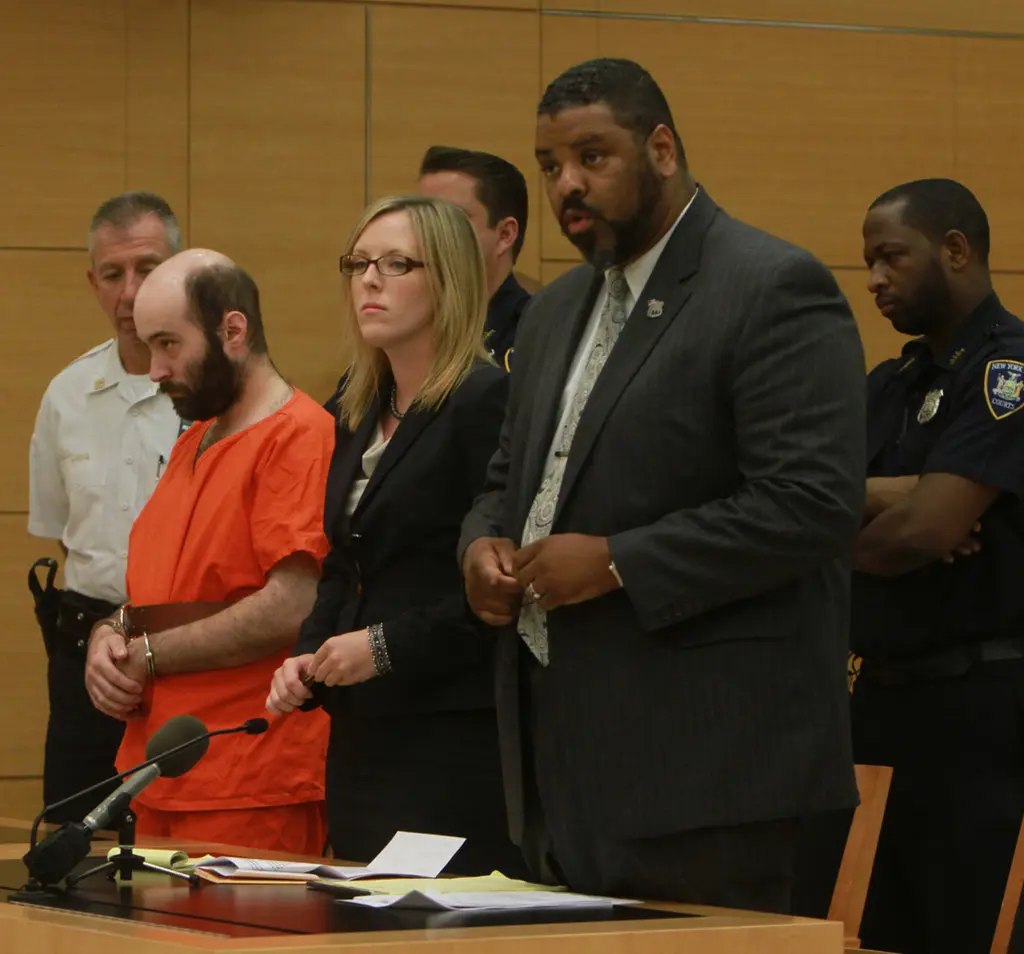
Jennifer McCann (defense attorney): “People assume I’m O.K. with a young boy being murdered because I represent the defendant…They have to understand, I’m not all right with people being murdered or with crime. I’m all right with defending constitutional rights.” See related comments by Harvard Professor of Law Alan Dershowitz, a liberal Democrat who argued in support of select legal arguments raised by Donald Trump. (See this external link.) Note also this statement by Supreme Court Justice John Roberts, Jr. at his 2005 Senate confirmation hearing: “that you don’t identify a lawyer with the particular view of the client, or the views that the lawyer advances on behalf of a client, is critical to the fair administration of justice.” (See this external link.)
________________________________________________________________________________________________

Mark Estes, via Josh Ross
Lee Ross (professor of psychology): Ross’s spoken testimony as to how he was perceived differently by students in his social psychology and statistics courses. Follow this external link.
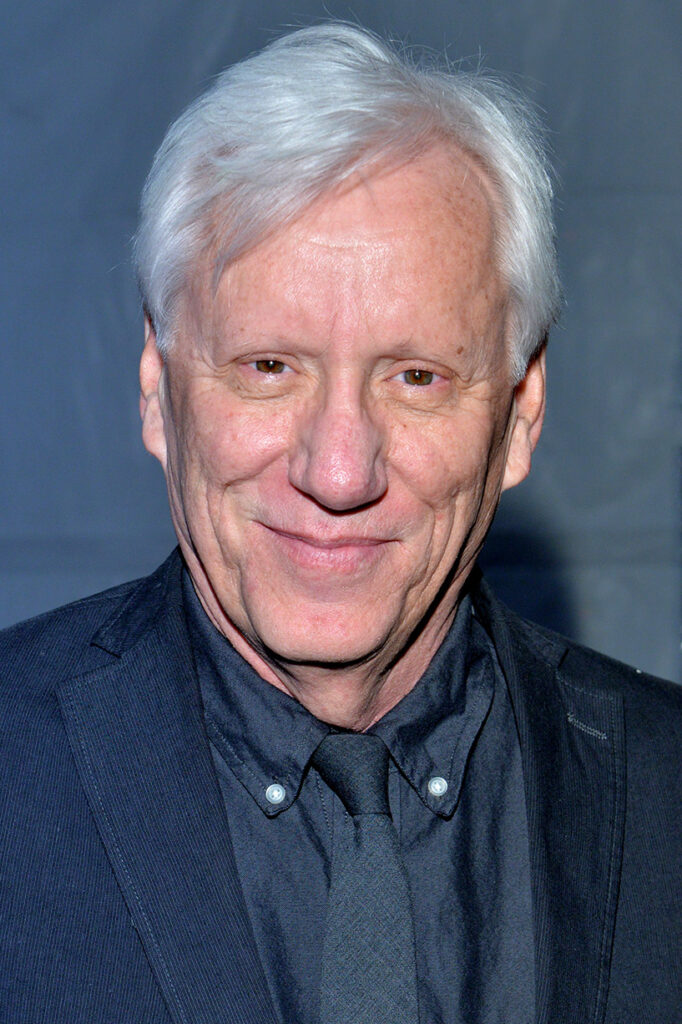
James Woods (actor): Woods says people see his whacked-out screen roles and are shocked that he’s funny in person. “What do you think, I sit around the house shooting people? I’m an actor, for crying out loud.”
© Glenn Francis, www.PacificProDigital.com

“Sterling K. Brown” by Gage Skidmore is licensed under CC BY-SA 2.0.
Sterling K. Brown (actor): “As an actor I do not have to like every character I play.” “People, I’m the dude who takes the words of another dude and makes it seem like he came up with them himself. That’s what I do for a living!”

Hugh Bonneville (actor who portrayed Lord Grantham on Downton Abbey): “One of the odder phenomena of the whole enterprise is how seriously Americans take it. People seem to believe [I am] an actual Earl,” he said.
“Hugh Bonneville” by jastrow75
is licensed under CC BY 2.0.

“File:Gerry Spence.jpg” by Greg Westfall is licensed under CC BY 2.0.
Gerry Spence (defense attorney): Lawyers for clients accused of notorious crimes often face the same kind of response. Here is how Spence described his pat response to the question frequently put to him, “How can you defend those people?”
“Well, do you think the defendant should have a trial before we hang him? If so, should it be a fair trial? If it is to be a fair trial, should the accused be provided with an attorney? If he is to be provided with an attorney, should the attorney be competent? Well, then, if the defense attorney knows that the defendant is guilty, should he try to lose the case? If not, should he do his best to make the prosecution prove its case beyond a reasonable doubt? And if he does his best, and the prosecution fails to prove the case beyond a reasonable doubt, and the jury acquits the guilty accused, who[m] do you blame? Do you blame the defense attorney who has done his job, or the prosecutor who has not?” [Paraphrased from the original]
__________________________________________________________________________
DISCUSSION QUESTIONS FOR STUDENT CONSIDERATION:
1.Most of the above instances highlight the experiences of people explicitly called upon by their roles to exhibit behaviors or voice arguments that are not necessarily their own. How might correspondence bias help make sense of these examples? Can you think of alternative explanations for particular cases above?
2.Can you think of other instances where people are required by their roles to express views that may not be their own? What may be far more common are circumstances in which an individual’s behavior or statements are more subtly affected by social influences (e.g., the behavior or presence of others around that individual). Can you identify everyday examples of this kind–perhaps even from your own experience–where behavior is socially shaped but taken by perceivers as reflecting underlying corresponding characteristics of the person behaving?
__________________________________________________________________________
NEXT STEP:
To learn about the foundational research study on correspondence bias by Jones and Harris, click here.
To return to the “Were Lady Gaga and Bradley Cooper in Love? Recognizing Correspondence Bias in Social Perception” page, click here.
__________________________________________________________________________
